
B2B Homepage Hero Section Design — What Actually Converts

.svg)
We've designed over 175 B2B homepages. The hero section — the part visible without scrolling — is where most of the work happens and where most of the mistakes happen too. Here's what we've learned about what actually moves buyers.
The 5-second test
A cold visitor to your homepage has one question before they scroll: is this relevant to my problem? They're not reading your copy carefully. They're scanning for signals. Does this company work with companies like mine? Does it look credible? Does it say something that sounds like my situation?
If the hero section doesn't answer "yes" to those questions in the first five seconds, they're gone. Not frustrated — they just close the tab and move on. So everything in the hero needs to be doing work toward that snap decision.
The headline formula that actually works for B2B
The best B2B hero headlines we've written follow a version of this structure: who you help, what they get, what's different about how you deliver it. You don't need all three in the headline itself — some belong in the subheadline — but all three should be visible in the hero without scrolling.
Weak: "We build exceptional digital experiences for forward-thinking companies." Nobody can tell if this is for them.
Better: "Your B2B website is losing you deals. We fix that." Specific problem, specific promise. A CMO at a 50-person SaaS company either recognises themselves in this or they don't — and that's the point. You're not trying to speak to everyone.
The subheadline does the clarifying work: who specifically you help, what's included, what the timeline looks like. That's where "Flowdojo rebuilds B2B websites in Webflow — brand identity to CRM-connected lead capture — in 4–5 weeks" lives.
Hero image: the credibility scoring system
Stock photo of people in a meeting: subtract ten points from your credibility. Generic abstract illustration: neutral but forgettable. Real product screenshot: adds twenty points. Dashboard or outcome screenshot with real data visible: adds forty points.
B2B buyers are evaluating you the same way they evaluate everything else — by looking for signals that you've done this before and know what you're doing. A real product screenshot says "we have a real product." A stock photo of a handshake says nothing.
If you don't have a product interface to show, the next best thing is real project work — a before/after, a screenshot of something you built, a design mock that shows your aesthetic. Anything that demonstrates competence is better than a placeholder that demonstrates nothing.
CTA: one, specific, with micro-copy
The most common hero mistake we see is multiple CTAs competing for attention. "Book a demo" and "Start free trial" and "Learn more" — three buttons, three decisions, zero conversions. Every additional option is friction. Pick the one thing you most want a cold visitor to do and make that the only button.
Then add micro-copy beneath the button that reduces the friction of clicking it. "30-minute call · We review your site live · No pitch" tells the person exactly what they're committing to when they click. It converts better than "Book a demo" alone because it answers the implicit question: what is this going to cost me in time and awkwardness?
Social proof: where it goes
Social proof in the hero — client logos, review count, a specific stat — has to earn its place. Logos of companies nobody recognises don't help. A fake-looking "4.9 stars · 200+ reviews" that nobody can verify doesn't help.
What does help: recognisable logos from companies your ICP admires, a specific stat with an honest number (we use "175+ projects" because it's specific and verifiable), or a single real testimonial sentence from a named person at a named company.
Position this either directly below the headline or as a trust bar below the CTA — not above the headline, where it feels like corporate chest-beating before you've said anything useful.
Dark mode vs light mode for B2B
This matters more than most people think, and there's no universal answer. Enterprise buyers — CFOs, compliance leads, procurement — tend to respond better to light, clean, slightly formal design. It reads as established and trustworthy. Developer-led buyers or technical founders often convert better with darker, more technical aesthetics — it signals that you understand their world.
Before choosing, ask: who is primarily making the buying decision? If it's a CMO or marketing director, lean light. If it's a CTO or technical co-founder, dark often works. If it's both, go light — it crosses categories better than dark does.
What we audit in the first ten minutes
When we look at a new client's site, the hero section audit takes about ten minutes: can I tell what you do in five seconds, what ICP you serve, what's unique about your approach? Is there one clear CTA with micro-copy? Is the visual design doing trust work or just taking up space? Is there any real social proof?
Book the free audit call and we'll walk through yours live.
Related Posts

What conversion rate should a B2B website hit? Industry benchmarks, what a good demo request rate looks like, and what to fix if your site is underperforming.
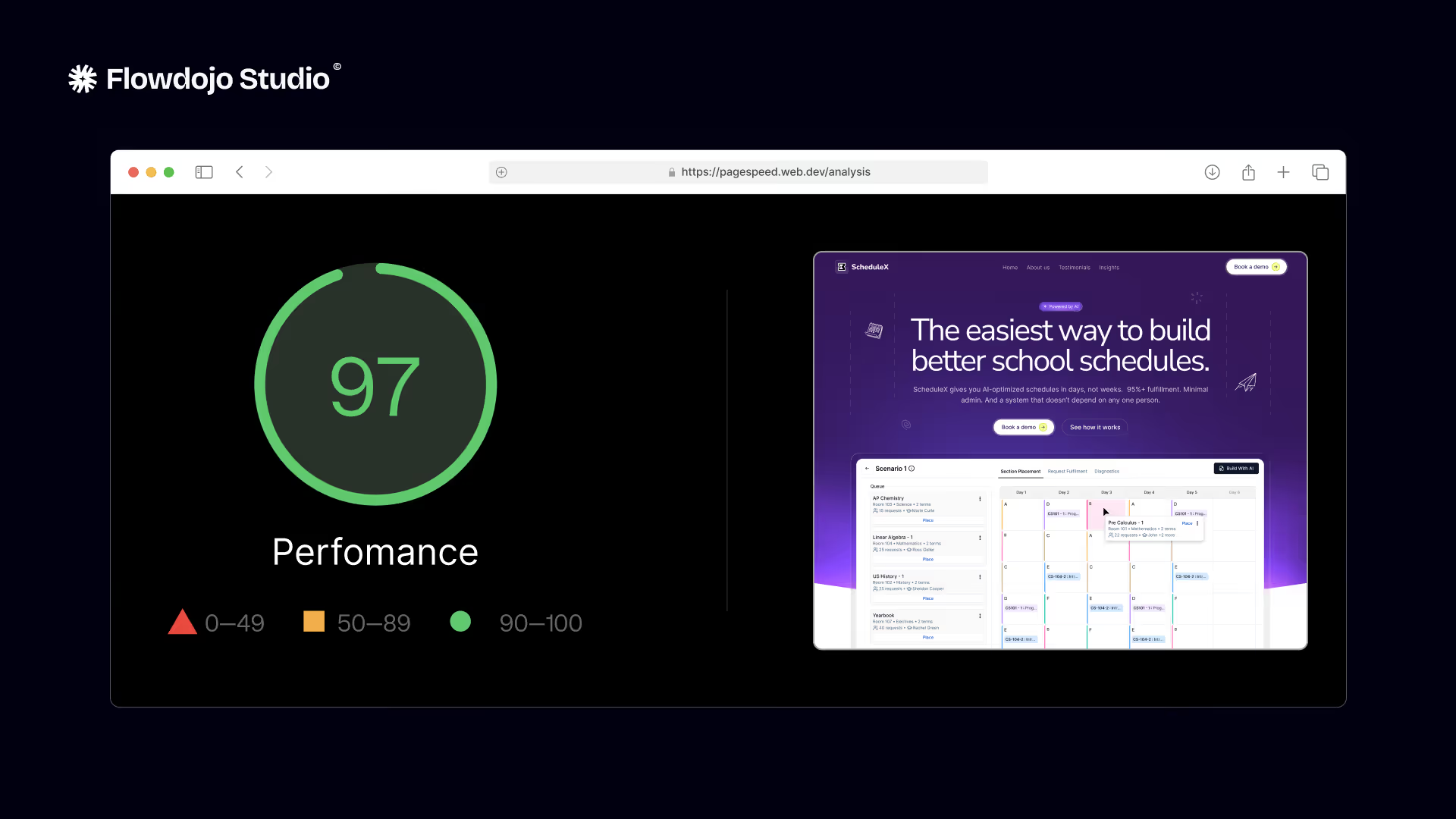
We check forty things before we launch any Webflow site. Most agencies check five, maybe ten. The difference is in the details nobody notices until something breaks at 9am the day after launch.
How Long Does a B2B Website Rebuild Actually Take?
Every agency tells you "six to eight weeks." Then it's fourteen weeks and everyone's frustrated. Here's why that happens and what an honest timeline actually looks like.